

December 22nd, 2025
2025 in Physical Therapy: RTM Growth and What's Next
A year-end look at RTM growth in physical therapy, key industry milestones, and what 2026 holds for clinic revenue and care delivery.
This past year tested physical therapy practice owners in familiar ways. Reimbursements remained under pressure. Staffing challenges persisted. Patient expectations continued to rise.
But it also delivered clarity.
Across conferences, conversations, and clinic floors, one theme became impossible to ignore: the future of physical therapy will be defined by what happens between visits. Engagement outside the clinic is no longer a “nice-to-have.” It’s where patient outcomes are improved, revenue is increased, and long-term practice sustainability is strengthened.
For EverEx, this year was about listening closely to the MSK community and aligning what we heard with tools that reflect the full scope of modern care.
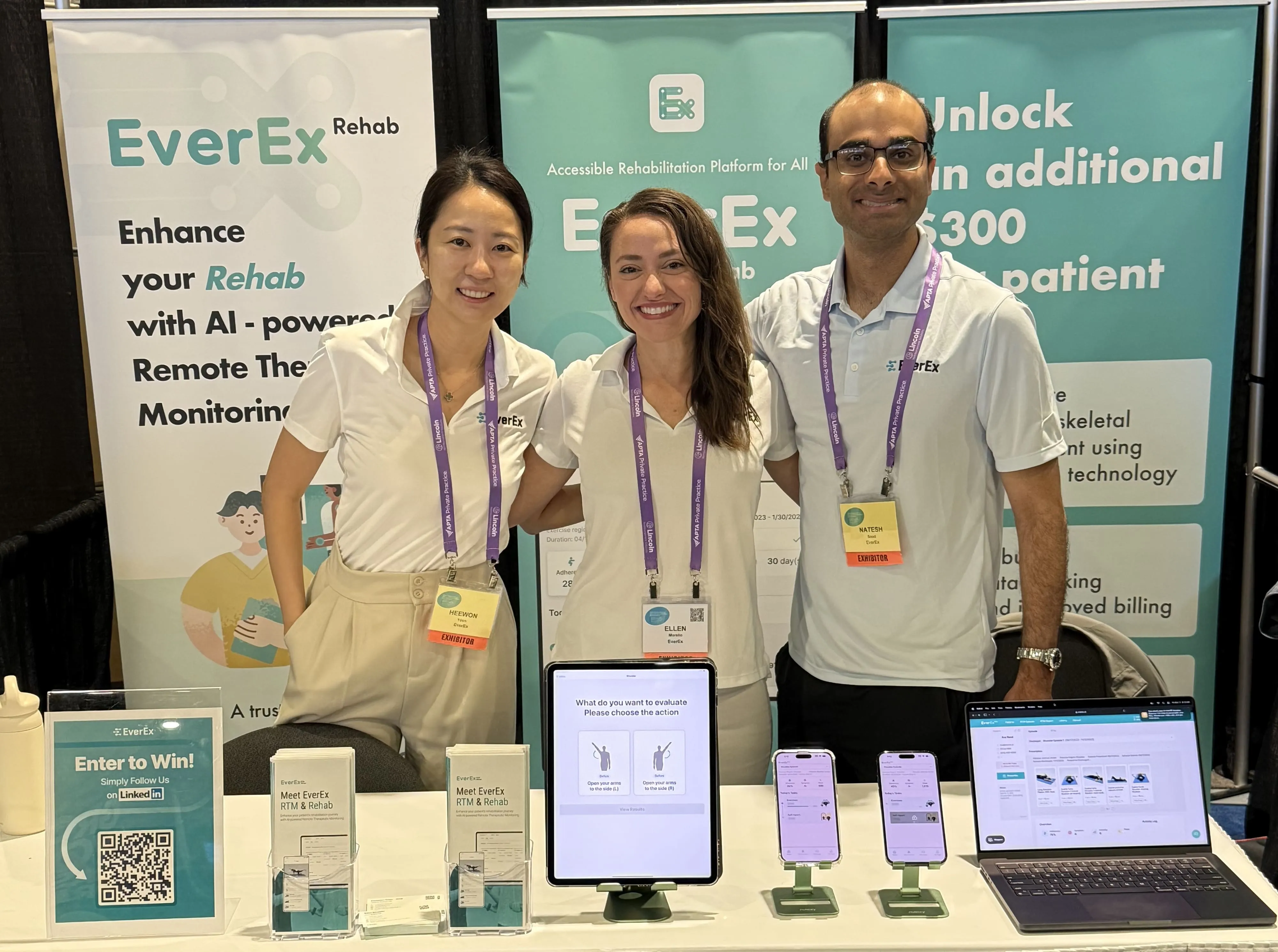
The year began at CSM, where innovation and collaboration took center stage across the MSK landscape. Conversations extended beyond technology for technology’s sake and focused instead on how digital tools can meaningfully support clinicians and patients alike.
What stood out most was a shared understanding that in-person care alone cannot carry the full burden of recovery. MSK conditions are complex, ongoing, and deeply influenced by what patients do outside the clinic. The question was no longer whether digital care belongs in physical therapy, but how it can be integrated in a way that enhances clinical decision-making without adding friction.
CSM reinforced an important truth: progress in MSK care depends on extending support beyond scheduled appointments while keeping clinicians firmly in control of care.
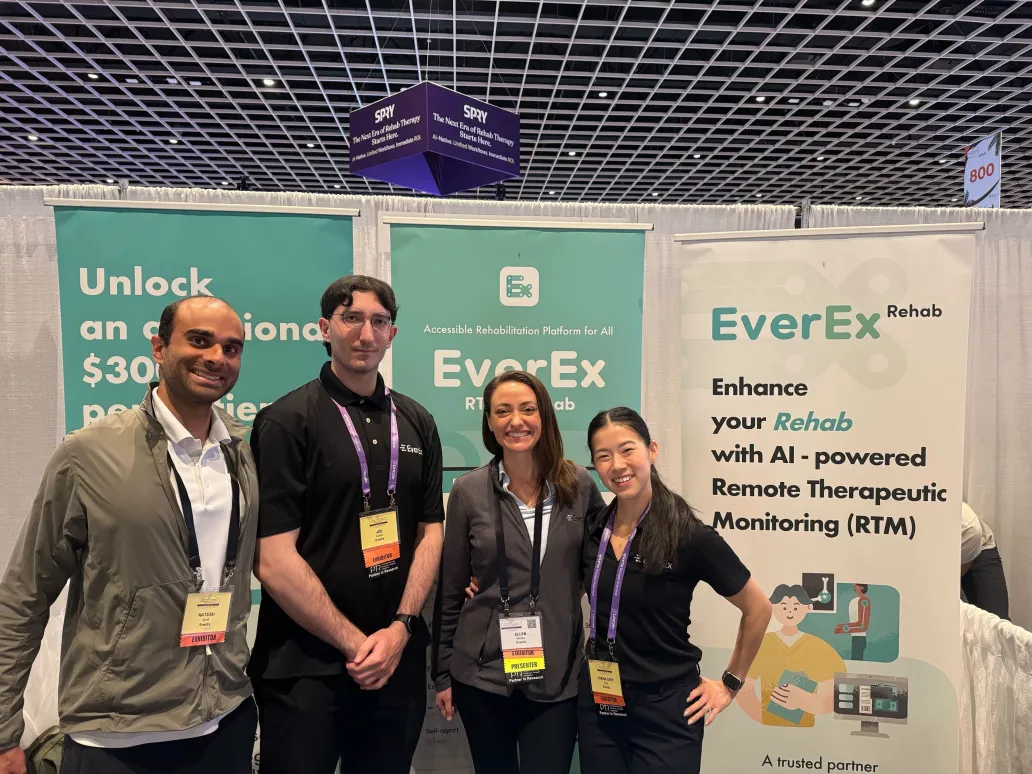
By the time PPS arrived, the conversation had shifted.
Patient engagement, digital physical therapy, and Remote Therapeutic Monitoring were no longer abstract concepts. Practice owners were asking practical questions about implementation, sustainability, and reimbursement. The focus moved from curiosity to execution.
At PPS, it became clear that between-visit engagement is where practices win or lose. When patients disengage between appointments, plans of care stall, outcomes suffer, and revenue becomes unpredictable. When engagement is consistent, accountability improves and completion rates follow.
RTM emerged as a powerful way to support that engagement. Not by increasing visit volume or clinician workload, but by recognizing the clinical oversight that already happens outside the clinic walls. PPS confirmed what many practice owners already know: better engagement leads to better outcomes, and better outcomes create stronger businesses.
As the year came to a close, expanded RTM codes for 2026 brought much-needed clarity and flexibility. For the first time, reimbursement more fully reflected the ongoing work therapists do to guide patients between visits.
These updates signaled an important shift. Between-visit care is no longer invisible. Monitoring progress, supporting adherence, and responding to patient needs in real time are now recognized as essential components of effective MSK care.
For practice owners, this validation changes the conversation. RTM is not about adding complexity or chasing new revenue streams. It is about aligning financial sustainability with the clinical behaviors that drive recovery.
This year underscored a simple but powerful truth: relying on visit volume alone is no longer enough. The practices that thrive are the ones that strengthen engagement between appointments.
Between visits is where patients struggle most and where support matters most. It is also where therapists can make the greatest impact without overextending their schedules. When engagement improves, outcomes improve. Patients completing their care plans are closely correlated with improved outcomes. And when care plans are completed, revenue becomes more predictable.
RTM creates a model where clinical excellence and business performance move forward together.
Looking ahead, the opportunity is clear. Physical therapy is evolving toward care models that reflect how recovery actually happens day to day. Digital engagement, supported by thoughtful reimbursement, is no longer experimental. It is foundational.
EverEx remains focused on helping practices implement RTM in a way that is seamless, compliant, and clinically meaningful. By extending a therapist’s reach beyond the clinic while simplifying the operational burden, we aim to support sustainable growth without burnout.
The year ahead is not about experimenting with new ideas. It is about executing with confidence.
As the new year begins, now is the time to plan for care models that support patients beyond the clinic and support your practice for the long term.
Schedule a quick strategy session to explore how RTM can strengthen engagement, improve outcomes, and bring greater stability to your growth plan.
From all of us at EverEx, thank you for being part of a year that brought clarity and momentum to physical therapy.
Our latest news and trending topics