


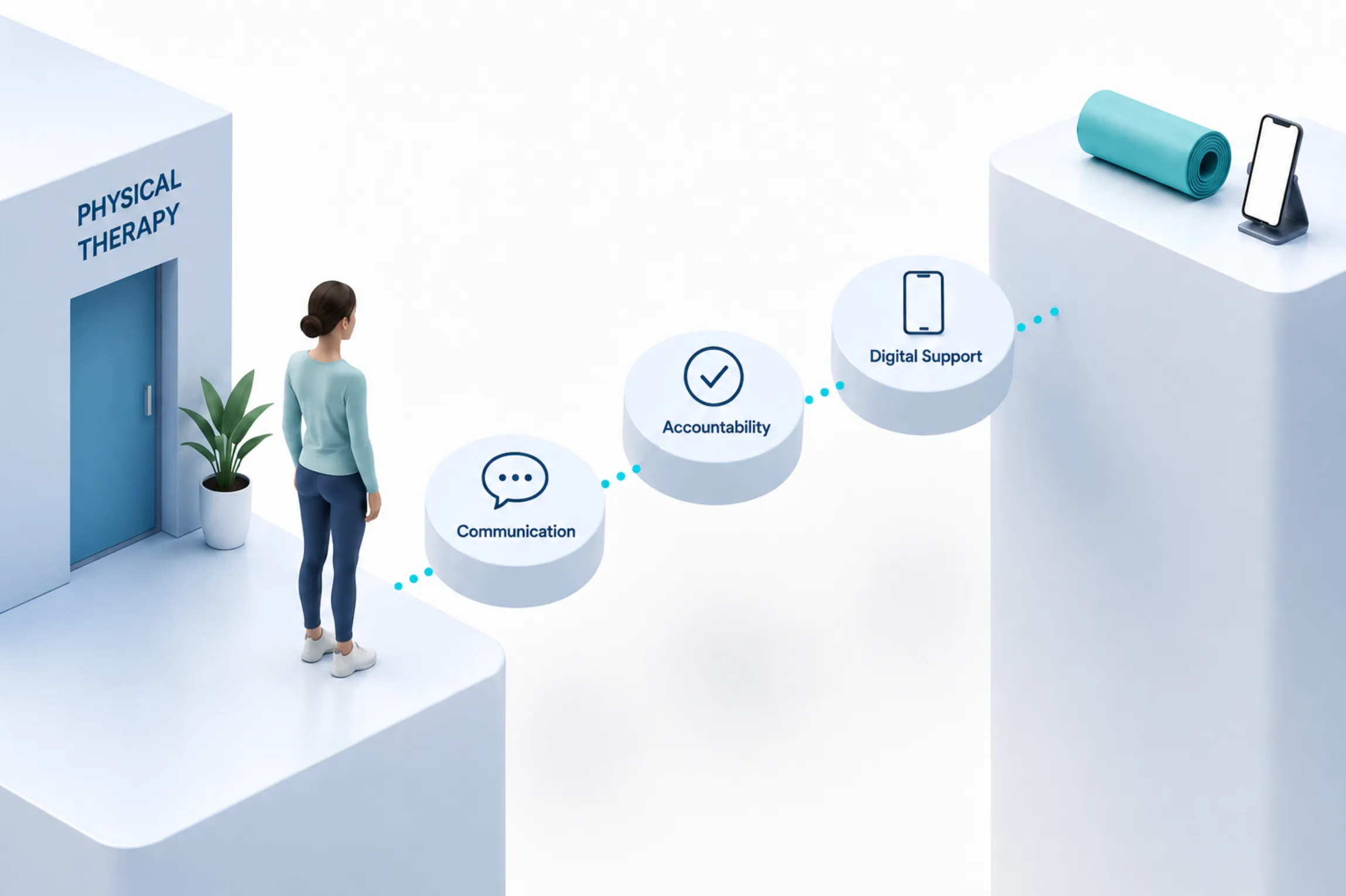
Pelvic floor rehabilitation asks patients to retrain muscles they cannot see and practice unfamiliar techniques largely on their own, between visits. That makes the support surrounding each appointment one of the biggest factors in whether recovery succeeds. When therapists pair clear communication and shared accountability with digital health tools and Remote Therapeutic Monitoring (RTM), patients stay more engaged, adhere to their home programs, and achieve better, longer-lasting outcomes in pelvic health.
Recovery Doesn't Begin and End in the Clinic
Pelvic floor rehabilitation is unlike many other forms of physical therapy. Patients are often asked to become aware of muscles they cannot see or easily feel while learning techniques that may seem unfamiliar—or even counterintuitive. Individuals with overactive pelvic floor muscles are frequently told to "just relax" without being shown how.
Because of these unique challenges, meaningful recovery extends beyond the treatment table. While in-person appointments provide the clinical foundation for rehabilitation, much of a patient's progress occurs between visits through consistent practice, increased body awareness, and the gradual development of new movement patterns.
Patients are most successful when they feel supported throughout this process. Ongoing communication, education, and encouragement help transform uncertainty into confidence and reinforce the therapeutic relationship that drives long-term success.
Communication Builds Confidence in Pelvic Floor Physical Therapy
Learning to coordinate and relax the pelvic floor requires more than a prescribed list of exercises. Patients need to understand why they are performing each exercise, how it supports their recovery, and what they should expect along the way.
Without this understanding, it is common for patients to question whether they are progressing appropriately—particularly when symptoms fluctuate, as they often do during pelvic floor rehabilitation.
Consistent communication helps eliminate uncertainty. Through secure messaging, educational resources, and timely guidance, therapists can answer questions, reinforce key concepts, and provide reassurance between appointments. When patients understand the purpose behind their treatment plan, they become active participants in their recovery rather than passive recipients of care.
This continuous connection strengthens patient confidence, improves adherence to home exercise programs, and reinforces the collaborative nature of rehabilitation.
Accountability Is a Partnership
The word accountability can sometimes feel intimidating, suggesting that patients are being evaluated on their performance. In reality, accountability in pelvic floor physical therapy is about creating a supportive partnership built on trust, communication, and shared goals.
Successful rehabilitation is not about perfection—it is about consistency.
The therapist contributes clinical expertise, comprehensive assessment, patient education, and progressive treatment planning. The patient provides honest feedback, participates regularly, and is willing to practice the skills introduced during therapy sessions.
Together, therapist and patient continually adjust the treatment plan based on symptoms, functional improvements, and individual goals.
When accountability is viewed as collaboration rather than obligation, patients are more likely to remain engaged, communicate openly about challenges, and celebrate meaningful progress—even when improvements occur gradually.
Digital Support Strengthens the Therapeutic Relationship
Technology is changing the way pelvic floor rehabilitation is delivered, extending care beyond the clinic. Digital platforms provide opportunities for therapists to remain connected with patients throughout the rehabilitation process while reinforcing the care delivered during in-person visits.
These tools may include:
• Video demonstrations that improve confidence with home exercises
• Secure messaging that allows timely communication
• Educational resources available whenever questions arise
• Exercise reminders that encourage consistency
• Progress tracking that helps patients recognize improvements over time
For patients participating in pelvic floor physical therapy, these resources provide additional guidance in the privacy and comfort of their homes while reinforcing the education and exercises introduced during clinic visits.
Importantly, digital support is not intended to replace face-to-face care. Instead, it strengthens the therapeutic relationship by extending the therapist's guidance into the patient's daily routine, where much of the rehabilitation process actually occurs.
Remote Therapeutic Monitoring Keeps Recovery Moving Forward
Remote Therapeutic Monitoring (RTM) builds upon digital support by creating an ongoing feedback loop between patient and clinician.
Rather than waiting until the next office visit to discover that exercises are too painful, confusing, or no longer appropriately challenging, RTM allows therapists to monitor participation, identify barriers early, and modify treatment plans before small challenges become significant setbacks.
This proactive approach is especially valuable in pelvic floor rehabilitation, where recovery often occurs gradually over weeks or months. Continuous feedback enables therapists to provide timely encouragement, adjust home exercise programs when necessary, and maintain momentum throughout the rehabilitation process.
By extending communication beyond scheduled appointments, RTM helps patients remain connected, supported, and engaged in their recovery.
What Patients Value Most About Digital Health Tools
Research consistently demonstrates that patients appreciate digital health tools when they enhance—not replace—the relationship with their healthcare provider.
Patients report greater satisfaction because digital platforms offer convenient access to educational resources, easier communication with their therapist, increased confidence in performing home exercises, greater involvement in their own recovery, and improved continuity of care between appointments.
According to Jaynie Bjornaraa, who serves as Senior Vice President for American Specialty Health and holds a PhD, MPH, and PT, one of the most common misconceptions about virtual pelvic health physical therapy is that it is less personal or less effective than in-person care. In practice, many patients actually feel more comfortable discussing sensitive concerns from the privacy of their own homes, allowing the therapeutic relationship to become even stronger.
When technology is intuitive, accessible, and supported by compassionate clinical care, patients feel empowered rather than isolated. Digital tools become an extension of the therapist's expertise, helping patients stay engaged throughout their rehabilitation journey.
Keeping Patients Connected Between Visits
Pelvic floor rehabilitation is about far more than prescribing exercises. It is about helping patients understand their bodies, build confidence in movement, and regain the ability to participate fully in the activities that matter most to them.
Communication creates trust. Accountability encourages consistency. Digital health tools and Remote Therapeutic Monitoring extend the therapist's guidance beyond the clinic, providing ongoing support when patients need it most.
The future of pelvic floor rehabilitation is not about replacing the therapist with technology. Instead, it is about strengthening the therapeutic relationship through meaningful communication, collaborative accountability, and digital solutions that keep patients connected between visits.
When patients feel informed, supported, and actively involved in their care, they are more likely to remain engaged, overcome barriers, and achieve lasting improvements in pelvic health.
References
1. Amir, A. S., et al. (2025). Bridging the digital divide: Enhancing doctor-patient communication through digital media platforms. Journal of Education and Health Promotion, 14, 423.
2. Madanian, S., et al. (2023). Patients' perspectives on digital health tools. PEC Innovation, 2, 100171.
3. Modern Healthcare. Value of Virtual Physical Therapy for Pelvic Health.