

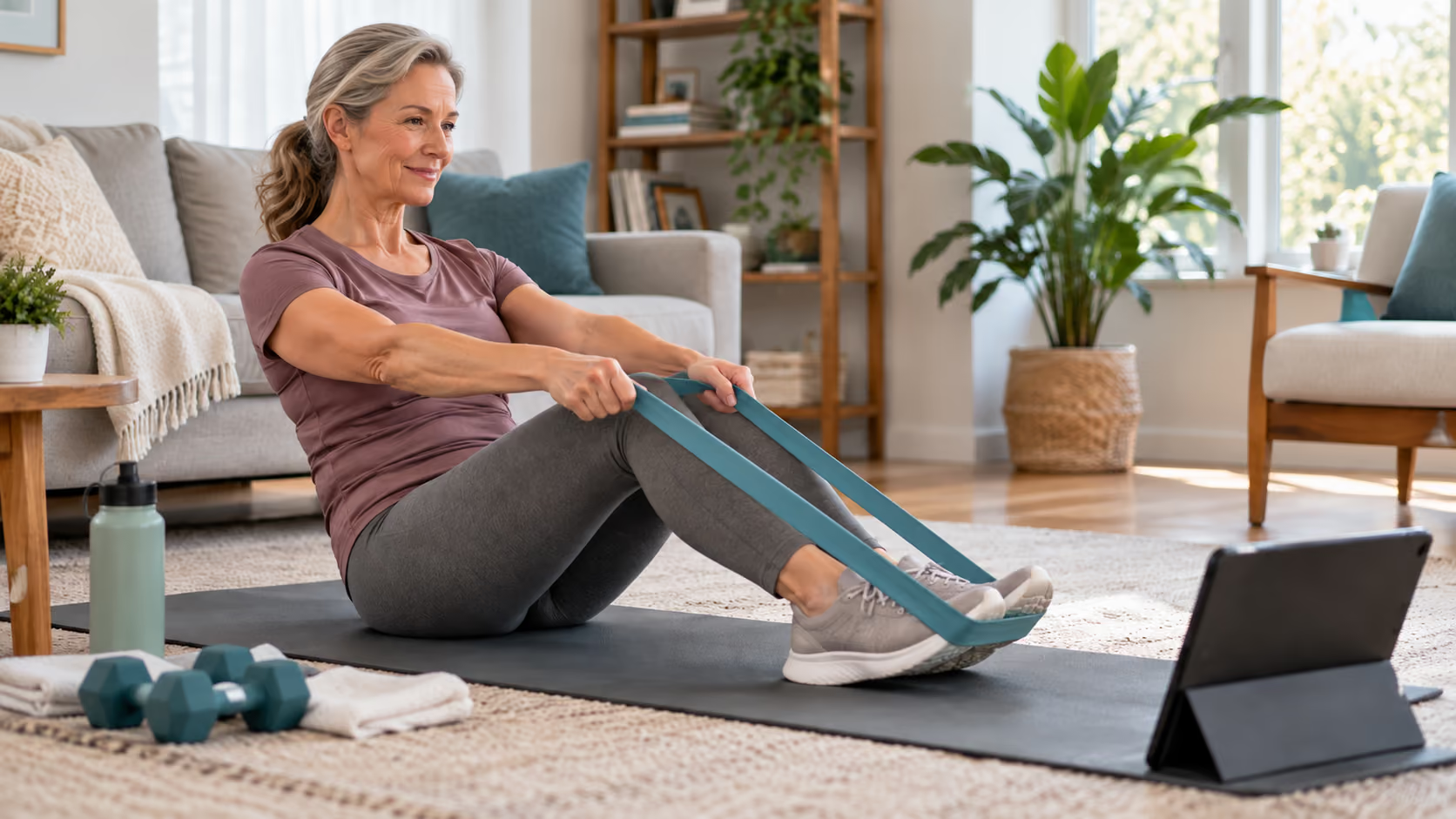
Patients spend a few hours a week in our clinic and more than 160 outside it. The home exercise program (HEP) is how we extend care into those hours, yet many patients, often estimated at half or more, don't fully follow through. A printout and "do these daily" isn't enough. Adherence improves when we understand the person, address barriers, build the program together, and measure what's happening at home.
Step 1: Understand the person
"Less pain" rarely keeps someone exercising on a tired night, but a specific, personal goal does: getting back on the golf course, lifting a grandchild, or dancing at a family member's wedding.
Motivational interviewing (MI) helps patients voice their own reasons for change. Its core skills are open-ended questions, affirmations, reflections, and summaries. Listen for change talk ("I really want to...") and reflect it back.
Active listening underpins all of this: full attention, few interruptions, and checking your understanding before moving on to the next question.
Examples of meaningful questions:
- "What can't you do right now that you'd like to get back to?"
- "What hobbies have you had to give up or scale back?"
- "If therapy goes really well, what will be different in three months?"
Document these goals so you can refer back to them at reassessment. They anchor the HEP by giving the patient a reason to stay motivated and guiding which exercises you choose. They also become your measure of progress.
Step 2: Identify barriers
Ask without judgment: "What has gotten in the way of exercising before?" and "When could you realistically fit in 10 minutes?"
| Barrier | Clinical response |
|---|---|
| Pain and fear of movement | Explain expected vs. concerning symptoms, adjust the dose, and use graded exposure. Educate, educate, educate! Pain science education in particular helps patients understand how outside factors such as stress and sleep influence pain, and how movement can help. |
| Time | Trim the program, split it into micro-sessions, and attach exercises to existing routines. |
| Low confidence | Demonstrate each exercise and have the patient perform it back, provide video demos, and build early wins. |
| Low perceived value | Tie each exercise to the patient's goals and show their progress. |
| Mood or stress | Screen when appropriate, coordinate with the care team, and modify the program as needed. |
| Access and environment | Adapt exercises to household items and small spaces. Make sure the patient has the proper equipment, or modify the exercise so it's convenient for them. |
Step 3: Build the program together
- Learn the patient's schedule. Get a general sense of their typical day before assigning exercises.
- Keep it short. Choose three to five high-yield exercises, each tied to a stated goal.
- Plan when and where. Concrete plans ("After I brush my teeth, beside the bed") are more likely to happen than general intentions.
- Start small. A five-minute routine done daily beats a 30-minute routine that gets skipped.
- Have a minimum version for busy weeks and flare-ups.
- Confirm understanding with teach-back, and set clear expectations about soreness.
Step 4: Measure adherence with RTM
Self-report at the next visit is unreliable, and by then progress may already be lost. To fully understand whether a patient is adherent, we need objective data. Remote therapeutic monitoring (RTM) lets patients log exercises, pain, and difficulty through an app so clinicians can review and respond between visits.
RTM provides objective adherence data, a chance to intervene early when engagement drops or pain spikes, and real information to guide progressions and in-clinic conversations. It shows clearly whether the patient is doing their exercises and how often throughout the week. RTM is also billable, which makes between-visit care sustainable. Therapists bill RTM under a plan of care using specific CPT codes:
| Code | Covers |
|---|---|
| 98975 | Initial setup and patient education |
| 98985 | MSK device and data, 2 to 15 days in a 30-day period |
| 98977 | MSK device and data, 16 to 30 days in a 30-day period |
| 98979 | Treatment management, 10 to 19 minutes per month |
| 98980 / 98981 | Treatment management, first 20 minutes / each additional 20 minutes |
Treatment management codes require at least one interactive communication with the patient per month. Confirm payer-specific rules with your billing team.
Step 5: Measure functional change
Asking "How's walking the dog going?" is a good start, but validated questionnaires make progress measurable and easier to share with payers and referring providers. Collect questionnaires at the evaluation to establish a baseline, then again at re-evaluation and discharge. Many RTM platforms can send them remotely.
The Patient-Specific Functional Scale (PSFS) fits this approach especially well. Patients rate three to five activities they chose, often the goals from Step 1, on a 0 to 10 scale. A patient who rates "playing 18 holes" a 2 at evaluation and an 8 at discharge can see exactly how the HEP paid off.
Closing the loop
Each step informs the next. If RTM shows adherence dropping, revisit barriers with motivational interviewing. If adherence is strong but scores plateau, reassess the exercises. If both improve, share that progress with the patient. The exercise list is just the starting point. Understanding the person and measuring both adherence and function is what keeps patients connected to their plan of care.