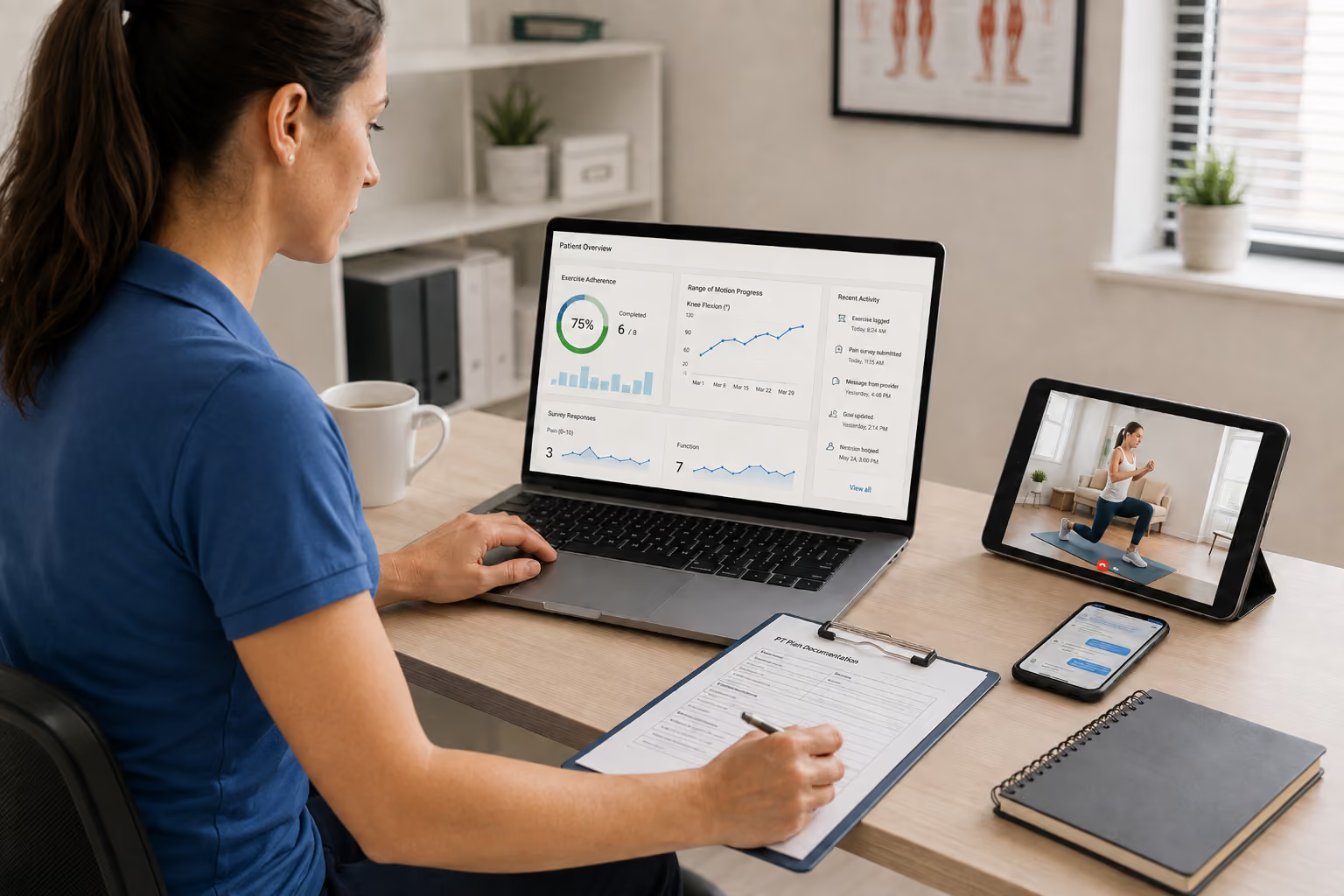
Remote Therapeutic Monitoring gives physical therapy practices something the profession has wanted for a long time: clinical visibility that does not stop at the clinic door. But RTM is not a switch you flip by handing a patient a login. The value, and the reimbursement, lives in the documentation. Practices need clear processes for capturing patient onboarding, data transmission, clinical monitoring, interactive communication, and any changes made to the plan of care.
Consistent documentation creates a clearer record of how RTM is actually being used across a patient's episode of care. Understanding what should be captured under each applicable RTM code is the first step in building that workflow, so here is a practical, code-by-code walkthrough.
6
RTM codes spanning setup, transmission, and management
30
Days in each RTM monitoring period
16
Qualifying days of transmission required for 98977
The RTM codes at a glance
Before getting into the detail, it helps to see the whole set together. Each code corresponds to a different stage of the RTM episode, and each carries its own documentation expectations.
| Code | What it covers | Key documentation trigger |
|---|
| 98975 | Device or application setup, education, and onboarding | Billed once per episode of care |
| 98985 | 2–15 days of data transmission in a 30-day period | Once per 30-day billing period, when the transmission criteria are met; not billed when 98977 applies |
| 98977 | 16 days of data transmission in a 30-day period | Once per 30-day billing period, when 16 qualifying transmission days are reached |
| 98979 | Interactive communication and RTM treatment management | Live phone or video contact — date, time, duration, and conversation summary logged |
| 98980 | First 20 minutes of RTM treatment management in the month | Time, discussion summary, and any plan-of-care changes |
| 98981 | Each additional 20 minutes of RTM management in the month | Up to 3 additional times per calendar month, once 98980 is satisfied |
Setup, education, and onboarding
The RTM process begins with properly documenting the technology being used and the education provided to the patient. For practices using EverEx, that means identifying the EverEx Rehab iOS or Android Software as a Medical Device (SaMD) application by name, and capturing the setup and education the patient actually received.
CPT 98975
Device setup, education, and onboarding
According to the provided billing template, 98975 can only be billed once per episode of care. The goal of onboarding documentation is to establish that the patient was appropriately introduced to the technology and understands how to use it as part of their care plan.
Patient education may include
Navigating the application and using its available features
Completing exercises according to prescribed home exercise program parameters
Completing range-of-motion measurements
Communicating with the physical therapist as needed through in-app chat
Billing frequency: Can only be billed once per episode of care.
Documenting RTM data transmission
After onboarding, documentation shifts toward capturing the data transmitted through the RTM platform during each 30-day monitoring period. Recording these data points establishes how the patient is engaging with the prescribed program and what information is available to the clinician for review.
What the EverEx application may capture
Self-reported survey responses
CPT 98985
2–15 days of data transmission
For 98985, the documentation template identifies a requirement to record the number of days of data transmission within the 30-day period and the type of information captured through the RTM device or application. The template indicates this code applies when the required threshold of transmitted data is met during the period, and that it should not be billed when the requirements for CPT code 98977 are satisfied.
Billing frequency: Can only be billed once every 30-day billing period, beginning with the start of the RTM program, provided the required data transmission criteria are met.
CPT 98977
16 days of data transmission
For 98977, practices should similarly document the software or medical application being used, the number of days of transmission, and the patient-generated data captured within the EverEx application. The primary distinction within the provided template is the number of qualifying days of transmitted data within the applicable 30-day period.
Creating a consistent internal process for tracking these days helps clinical and administrative teams recognize when the necessary data requirements have been reached, rather than discovering it after the period closes.
Billing frequency: Can only be billed once every 30-day billing period, beginning with the start of the RTM program, provided the required data transmission criteria are met.
RTM is more than collecting data
“Data alone does not tell the complete clinical story. The documentation has to show what the clinician did with it.”
One of the most important aspects of RTM documentation is showing what happens after patient information is transmitted. The record should demonstrate that the clinician reviewed the patient's information, interpreted what it meant in the context of their care, communicated with the patient when appropriate, and documented any resulting clinical decisions. That becomes especially important when documenting treatment-management services.
Interactive communication and treatment management
This is where RTM documentation does the most work, and where practices most often fall short. Beyond documenting time, clinicians should summarize what was discussed with the patient based on the transmitted RTM information and their clinical review, then connect that discussion back to the patient's care.
CPT 98979
Interactive communication and RTM management
Documentation should include the interactive communication with the patient, whether conducted by phone or video.
Capture alongside it
Date and time of communication
Duration of the interaction
Summary of the conversation
Dates and minutes associated with RTM activity
Time spent monitoring or reviewing patient data
Relevant raw log-level data
Most importantly, the record should connect that information back to the patient's care. Did the patient's reported or captured data indicate progress? Were they struggling with adherence? Did the conversation uncover a new concern? Did the clinician make a change to the plan of care? Those clinical connections are what demonstrate how RTM information informed the management of the patient.
CPT 98980
The first 20 minutes of RTM management
For 98980, the documentation framework follows a similar clinical process: capture the date, time, and duration of interactive communication, along with the time spent reviewing and monitoring RTM information during the applicable period. The documentation should then summarize the clinician's discussion with the patient and document any changes made to the plan of care.
Interactive communication (phone or video)
Date and time of the communication
Duration of the interactive communication
Summary of the conversation
Those changes may be informed by
Data recorded, transmitted, or captured through the RTM device
Information obtained during live interactive communication with the patient
The clinician's assessment of whether the patient is progressing as expected
CPT 98981
Additional RTM management time
Once the requirements for 98980 have been satisfied, 98981 may be used for each additional 20-minute increment of RTM management time within the calendar month, according to the provided template. Documentation should capture the same elements used for 98980 — the date and time of the interactive communication, its duration, a summary of the conversation, and any resulting changes to the plan of care — applied to the services provided beyond the initial 20 minutes.
Maintaining consistent documentation across these interactions makes it easier to see how RTM activities accumulate through the month — and how clinicians are using that time to support the patient's care.
Billing frequency: Can only be billed 3 additional times per calendar month.
Building RTM documentation into the clinical workflow
The most sustainable approach is to make documentation part of the clinical workflow rather than treating it as a separate administrative task. A strong process should let the clinical record answer five straightforward questions.
Question 01
What technology was the patient using?
Document the RTM device or application by name, and the education provided during onboarding.
Question 02
What information did the patient transmit?
Record qualifying transmission activity and the relevant information behind it — exercise adherence, range of motion, survey responses, or step data.
Question 03
What did the clinician review?
Capture the time spent reviewing or monitoring the patient's RTM information during the applicable period.
Question 04
What was discussed with the patient?
Document the interactive communication and summarize the clinically relevant discussion — not just that a call happened.
Question 05
What changed as a result?
Where appropriate, record how RTM findings or patient communication informed changes to the plan of care, and whether the patient was progressing as expected.
When these elements are documented consistently, RTM becomes more than a collection of digital activity. It creates a longitudinal record of how information generated between visits is reviewed and incorporated into ongoing patient management.
Turning between-visit data into actionable care
Remote Therapeutic Monitoring can give clinicians far greater visibility into what happens between scheduled appointments — but the value of that information depends entirely on how effectively it is incorporated into care. A thoughtful RTM workflow connects patient onboarding, transmitted data, clinician review, patient communication, and clinical decision-making into one continuous thread.
For practices implementing RTM, building documentation standards around each of these steps creates a more organized and repeatable process, and gives everyone — clinicians, administrators, payers — a clearer picture of how RTM supports the patient's episode of care.
Ultimately, effective RTM documentation should tell the story of the patient beyond the clinic visit: what happened, what the clinician learned, how they responded, and how that information influenced the patient's ongoing care.
A note on this guide
This article is intended as general educational information about RTM documentation practices and reflects the documentation template referenced throughout. It is not billing, coding, legal, or reimbursement advice. CPT code requirements, payer policies, and coverage rules change over time and vary by payer and jurisdiction. Practices should confirm current requirements with their own billing and compliance resources before making decisions about RTM claims.