Improve patient outcomes. Grow clinical revenue.Request a Demo →
Customer story ·
LifeLine Partners

How LifeLine Partners made RTM part of everyday patient care

LifeLine Partners

LifeLine Partners runs outpatient physical and occupational therapy across four locations in Northeast Ohio. Over its first year with EverEx, the practice built Remote Therapeutic Monitoring into everyday clinical workflows, one office at a time, and changed how its team stays connected to patients between visits.

Key outcomes
282

Patient registrations recorded across LifeLine's RTM program, October 2025 to October 2026

275

RTM episode records documenting program activity over the same period

79.74%

Average exercise performance rate, on days patients exercised

Based in
Northeast Ohio
Clinicians
6
Locations
4
Specialty
Physical Therapy
Practice type
Multi-Location
Products
HEP RTM

The challenge

LifeLine Partners has delivered outpatient physical and occupational therapy in Northeast Ohio since 2000, across four locations between Trumbull and Mahoning counties, along with in-home services. Home exercise was the one part of care the team could never see.

"In the past, we would give a paper home exercise program to the patient and we send it home with them, and it's the same two sets of 10, and we don't know if they're doing it, where the paper's at," says Justin Stewart, PTA, the practice's Director of Marketing. Progressing a program meant printing another page. Between appointments there were stretches of four or five days in which nobody at the practice knew whether the plan was being followed at all.

That blind spot had a cost beyond clinical visibility. Stewart describes a patient referred for acute lateral epicondylitis who responded well to treatment but faced a $35 copay she could not manage two or three times a week. She was motivated and had a condition the team knew it could treat. The visit schedule itself was the barrier.

Closing that gap raised a second question, the one most practice owners actually weigh: whether monitoring could be absorbed into a working clinic without becoming another administrative burden on clinicians who were already fully booked.

The approach

LifeLine began with EverEx in November 2025, and started small on purpose. One physical therapist, Dominic, evaluated patients and uploaded their plans of care, and Stewart monitored and managed the programs. They worked in a single office with one patient, then two, then three, then five, until the workflow held together.

From there they expanded office by office, visiting each clinic to teach the onboarding procedure before that team began enrolling its own patients, with Stewart continuing to monitor. "It probably took us a good four to six months before we had all clinics up operating," he says. Occupational therapists came on after the physical therapy sites were running. Today the practice runs RTM across all four locations with a six-clinician team, four physical therapists and two occupational therapists, and Stewart monitors every patient on the platform.

Two practical decisions shaped adoption. The first was onboarding patients in the clinic rather than sending them home to work it out alone, so that on day one at home they are already completing exercises and Stewart is already messaging them. The second was an intake form added to every evaluation asking whether the patient wants to enroll in RTM, yes or no, with a reason recorded when the answer is no. That solved a quiet problem: in a busy outpatient clinic, enrollment was easy for providers to forget. It also gave the practice a record of why patients declined, such as not owning a smartphone, and let the team address the reasons it could control.

Monitoring itself sits in a fixed block rather than scattered through the day. Stewart arrives at eight, clears unread messages, works through clinician requests, and spends three to five minutes per patient. "I can just set an hour to an hour and a half a day, or maybe every other day, to monitor those patients," he says. "It's just been part of my day now."

The results

Between October 1, 2025 and October 30, 2026, EverEx recorded 282 patient registrations and 275 RTM episode records for LifeLine Partners. Episodes ran 66 days on average, with 58.7 monitoring minutes recorded per episode, and 51 episodes were active at the time of the report. For a program that began with one therapist and one monitor, that represents a year of steady adoption across four sites rather than a pilot that stalled after the first office.

Two figures describe engagement, and they answer different questions. Across every day within an episode, the average exercise rate was 9.35%. On the days patients did exercise, the average episode-level performance rate was 79.74%, meaning patients who opened the app generally completed what had been assigned to them. The second number measures follow-through on active days, not overall home exercise adherence.

What changed inside the clinic is harder to put in a dashboard. Stewart can see which exercises were completed in a therapy session inside the practice's Raintree EMR, adjust the program the same day, and talk the change through with the patient. Because he is in referring physician offices through the week, he can tell a doctor that their patient is adherent to the home program ahead of that patient's next appointment, which is a conversation the practice could not have before.

Staff workflows moved with it. Clinicians message Stewart when a patient has not been in, plans of care are updated weekly, and reps can be changed on request without reprinting anything. The ease of adjusting a home exercise program is the part he says he did not expect. At month end, the information captured through the platform pulls into the daily note in Raintree, and billing runs once a month in a single predictable block rather than visit by visit.

Documentation support shaped that side of it. Stewart followed a template EverEx provided when he started, and describes LifeLine's experience since as uncomplicated. "It's been great," he says. "We've had no denials, no insurance issues." That is one practice's reported experience; coverage and payment depend on payer, plan, and documentation.

The patient with the copay barrier still comes into the clinic, now once a week, with monitoring carrying the days in between. It is the case Stewart now makes to referring physicians for patients in the same position: evaluate in the clinic, treat in person, then progress the program through the app between visits. By his own estimate, "the patient progresses in four to six weeks, their condition's taken care of, and maybe they've only spent $100 or $150 versus two or three hundred coming in three times a week."

What's next

LifeLine now enrolls patients at the start of care rather than at discharge, so the team can monitor the home program across the full plan of care and, where patients want to continue, keep them on afterward while they work toward their goals. Stewart describes patients messaging months later to say they no longer have pain, know their exercises, and are ready to come off the platform.

The lesson he returns to is that the workflow has to be built before it can be scaled, and that it will not fit every patient. LifeLine spent four to six months bringing four locations on, one at a time, and decided early on that part of its patient population simply would not use an app. "Not to get hung up on some of the patients that aren't going to be consistent," is how he puts it. Designing around that, rather than against it, is what made the program sustainable.

A newer physical therapist, two years out of school, has taken on much of the RTM leadership. Stewart sees that as a way for new graduates to build plan of care management skills that carry over to patients who are not on RTM at all, and as a low-risk leadership role for a practice to offer.

His advice to an owner weighing the same change is unqualified. "It's a lot in the beginning, but it is 100% worth it. And we have seen such an increase in retainment of patients and adherence since we've started using RTM." Those last observations are his own, drawn from a year of running the program rather than from measured study.

What he sees ahead is more of it. "There's really no ceiling when it comes to how many patients you can manage," he says. "We should be managing the majority of our patients that are in the clinic."

“
I couldn't imagine treating patients like we used to a year ago, where we would just treat them and send them home and maybe not see them for four or five days. Now, having a communication where it's almost seamless, where I can sign on every day and communicate with that patient, it just seems like: how did we practice before, where we went four days not knowing what they were doing, or whether they were doing their exercises?
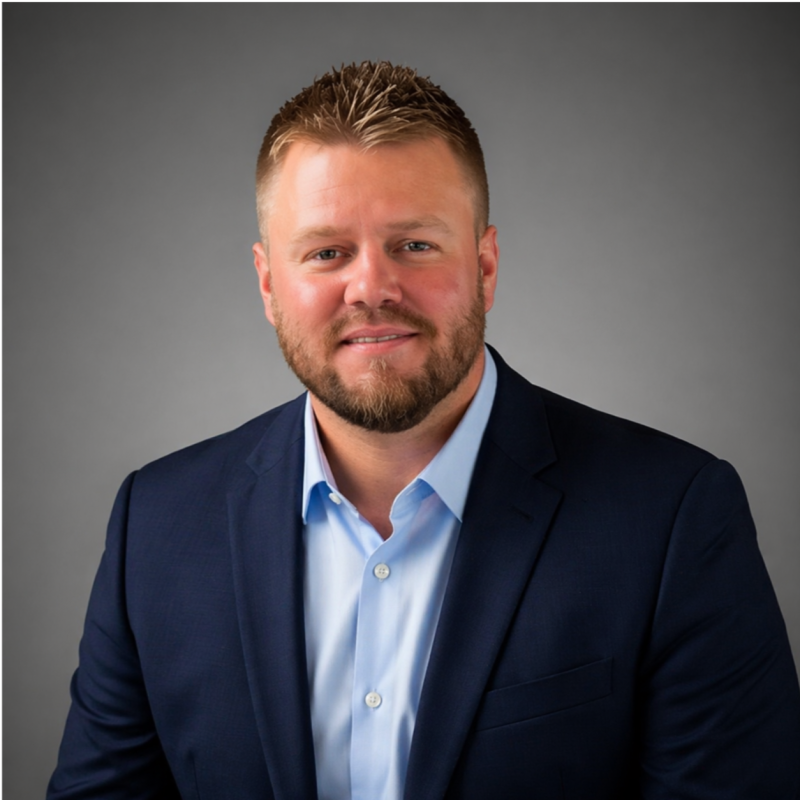
Justin Stewart, PTA
Justin Stewart, PTA
Director of Marketing, LifeLine Partners
Next step

See What RTM Could Look Like in Your Practice

Walk through how EverEx fits your clinical workflows, your patient engagement approach, and the way your team documents Remote Therapeutic Monitoring.